Compressed sawdust charcoal (compressed charcoal) is one of the charcoal products attracting increasing attention in the market, whether for domestic use, commercial applications, or export. This is largely due to the ability to make use of wood-processing residues and convert them into charcoal briquettes in various shapes and sizes, suitable for BBQ, hookah, and heating, depending on each product's specifications and manufacturing method.
However, the quality of compressed charcoal does not depend solely on the shape of the briquette or the type of raw material. Several factors influence the characteristics of the finished product, including sawdust cleanliness, moisture content, drying method, pressing and shaping efficiency, carbonization conditions, and laboratory test results.
In this article, we explain how compressed sawdust charcoal is manufactured, the key factors used to evaluate its quality, the differences between its commercial shapes, and the specifications and products offered by Ramses Charcoal for consumers, traders, and importers.
What Is Compressed Sawdust Charcoal?
Compressed sawdust charcoal is a charcoal product made by using sawdust and residues from wood processing. Instead of leaving these materials unused, they can be prepared and processed into solid charcoal briquettes in shapes and sizes that meet the needs of different markets.
The sawdust used in the industry comes from various sources, including sawmills, woodworking operations, and other wood-processing activities. Different types of wood may have different characteristics, which makes it important to pay attention to raw material quality, sorting, and preparation before manufacturing begins.
Compressed charcoal differs from traditional charcoal in its production method and final shape. Traditional charcoal is generally produced by carbonizing wood, while compressed sawdust charcoal is manufactured by preparing the raw material, pressing it, and shaping it through specific production stages.
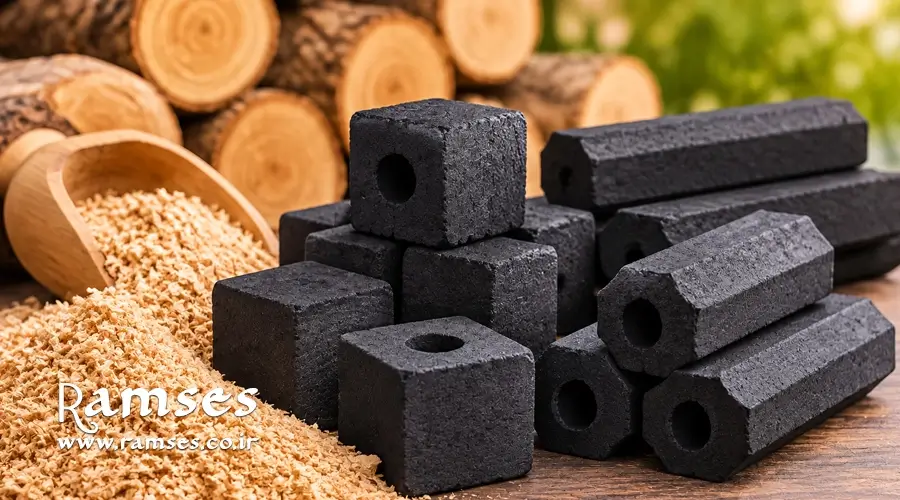
This method allows manufacturers to produce briquettes in different shapes, such as square charcoal with a hole, ingot-shaped charcoal, and hexagonal charcoal. The appropriate shape is selected according to the intended use, buyer requirements, and target market.
How Is Sawdust Charcoal Manufactured at Ramses?
The manufacturing stages directly affect the quality, density, and final characteristics of compressed charcoal. At Ramses, the sawdust charcoal production process consists of several consecutive stages, beginning with sawdust preparation and ending with carbonization.
1. Collecting Sawdust and Selecting Raw Materials
The manufacturing process begins with sourcing sawdust from different sources. This stage is important because raw material characteristics may vary depending on the type of wood, its source, and how it has been processed.
Having a large quantity of sawdust is not enough to guarantee a good product. The raw material must be suitable for manufacturing, and care must be taken to ensure that it is free from impurities and unwanted materials that could affect charcoal quality.
2. Cleaning the Sawdust
After the sawdust is collected, it is cleaned to remove impurities and foreign materials that may have mixed with it during transportation, storage, or processing.
Cleaning the raw material helps improve production consistency and reduces the possibility of unwanted components remaining in the finished briquettes.
3. Drying the Sawdust
Moisture is an important factor in compressed charcoal manufacturing. For this reason, the sawdust is dried before moving to the pressing stage.
Moisture content affects how the raw material behaves during manufacturing. Controlling it also helps achieve more consistent production conditions. Therefore, charcoal quality should not be judged by appearance alone; technical specifications and available laboratory analyses should also be considered.
4. Pressing and Shaping the Briquettes
After cleaning and drying, the sawdust moves to the pressing and shaping stage. Specialized equipment is used to transform the raw material into specific shapes according to the required product.
The shaping process allows manufacturers to produce square, ingot-shaped, or hexagonal briquettes. Their dimensions can also be adjusted according to the required design and specifications.
This stage is particularly important for commercial customers because consistent shapes and dimensions make the product easier to package, store, transport, and handle during use.
5. Carbonization of the Briquettes
After pressing and shaping, the briquettes undergo carbonization. During this stage, they are transformed into a charcoal product through heat treatment under suitable production conditions.
Carbonization is one of the most important stages in charcoal manufacturing because the degree of treatment and the conditions used affect the final product characteristics. Therefore, compressed charcoal should not be judged by its shape alone. Manufacturing quality and the product's specifications after processing must also be considered.
Once production is complete, the charcoal is ready for preparation and packaging according to the product type and order requirements.
What Factors Determine the Quality of Sawdust Charcoal?
When purchasing compressed charcoal, whether for personal use or commercial import, it is important to evaluate several specifications rather than relying only on price or appearance.
Moisture Content
Moisture content is one of the important indicators used to evaluate charcoal. High moisture levels may affect ignition efficiency and the energy available during use. This is why buyers pay attention to the actual moisture content of the product.
The stated moisture content of Ramses Charcoal products is 2%, according to the technical specifications published for the products.
Fixed Carbon Content
Fixed carbon is one of the key indicators used to evaluate charcoal and is an important factor when comparing products from a technical perspective.
The stated fixed carbon content of Ramses products ranges from 80% to 90%. Commercial buyers are advised to review the specifications and test results related to the product they intend to purchase, particularly when comparing different suppliers.
Calorific Value
Calorific value refers to the amount of energy that fuel can provide during combustion. It is used for technical comparisons between different types of fuel.
The stated calorific value of Ramses compressed charcoal is 8000 kcal/kg. This information helps importers and wholesalers evaluate the product according to the requirements of their target markets.
Briquette Strength and Dimensional Consistency
Briquette strength and consistency in shape and dimensions are practical factors that should be considered. Products intended for commercial distribution need to have shapes suitable for packaging, storage, and transportation. Significant variations in dimensions may make the briquettes more difficult to arrange or use.
Ash, Smoke, Odor, and Sparks
Many customers are concerned about the amount of ash produced during combustion, as well as the levels of smoke, odor, and sparks during use. Ramses Charcoal burns without producing smoke or unpleasant odors and does not emit sparks during use.
Technical Specifications of Ramses Compressed Charcoal
Ramses compressed sawdust charcoal products have the following stated technical specifications:
| Specification | Value |
|---|---|
| Moisture content | 2% |
| Fixed carbon | 80–90% |
| Calorific value | 8000 kcal/kg |
Uses of Compressed Sawdust Charcoal
Compressed charcoal has a variety of uses depending on the briquette shape, product characteristics, and user requirements. The main applications targeted by Ramses products include:
- Hookah and Shisha Charcoal
- BBQ Charcoal
- Heating Charcoal
Ramses Compressed Sawdust Charcoal Products
Ramses offers three shapes of compressed charcoal to meet different requirements in the hookah, BBQ, heating, and wholesale markets. Each product differs in design, dimensions, and intended applications.
1. Square Compressed Charcoal with a Hole
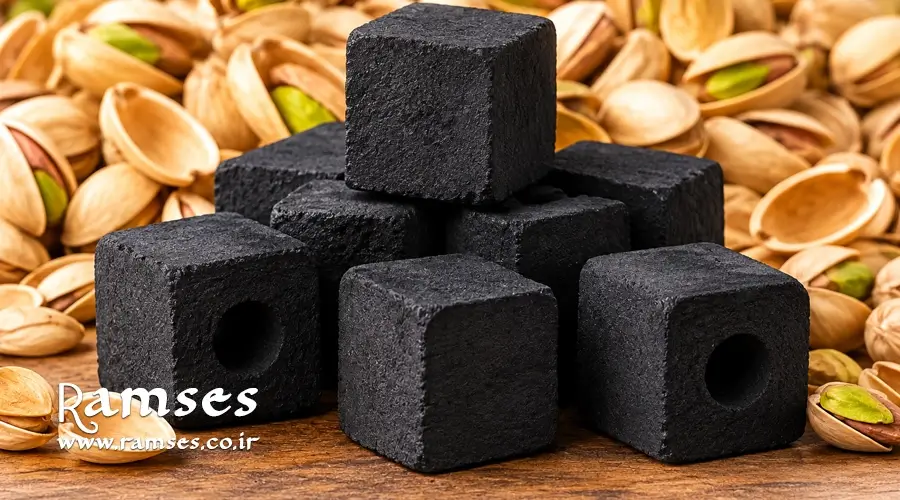
This product comes in square briquettes with a hole. It is one of the shapes that can be used for BBQ, hookah, shisha, and heating, depending on the appropriate method of use.
The published sizes for this product are:
- 37 × 37 × 30 mm, with a hole.
- 37 × 37 × 25 mm, with a hole.
The square design provides a uniform shape, while the hole gives the briquette a design that differs from solid square charcoal.
You can view the details, images, and specifications on the Ramses Square Compressed Charcoal with a Hole product page.
2. Compressed Charcoal Ingots
This product features an ingot or bar-shaped design. It is used for BBQ and heating food and water, and it may also be suitable for certain industrial applications depending on the requirements of the application.
Its published specifications include:
- Cross-section: 37 × 37 mm.
- Length: Available according to order requirements.
This design offers flexibility in determining the briquette length to suit the buyer's needs. It can therefore be a suitable option for traders, distributors, and customers who require a specific compressed charcoal shape.
For more details, visit the Ramses Compressed Charcoal Ingots product page.
3. Hexagonal Compressed Charcoal
Hexagonal compressed charcoal features a multi-sided design and is one of the recognized commercial shapes in the compressed charcoal market.
According to the published specifications, the product has a cross-section of 37 × 37 mm, while its length can be determined according to order requirements.
This shape is used for BBQ and heating. It may be suitable for buyers who prefer hexagonal briquettes instead of square or ingot-shaped charcoal.
To learn more about this product and its specifications, visit the Ramses Hexagonal Compressed Charcoal product page.
Comparison of Ramses Compressed Charcoal Shapes
| Product | Shape | Published Dimensions | Applications |
|---|---|---|---|
| Square Compressed Charcoal with a Hole | Square with a hole | 37 × 37 × 30 mm or 37 × 37 × 25 mm | Hookah, BBQ, and heating |
| Compressed Charcoal Ingots | Ingots or bars | 37 × 37 mm, length according to order | BBQ, heating food and water, and some industrial applications |
| Hexagonal Compressed Charcoal | Hexagonal | 37 × 37 mm, length according to order | BBQ and heating |
A difference in shape does not necessarily mean that one product is better than another for every application. The right choice depends on the intended use, required briquette size, operating method, and preferences of the target market.
Why Is Sawdust Used in Compressed Charcoal Manufacturing?
Producing charcoal from sawdust makes it possible to use residues generated by wood-processing activities instead of leaving them unused. This gives the industry an important practical advantage: converting leftover materials from other activities into a product that can be used and traded commercially.
However, the environmental impact of any product does not depend on the raw material alone. Other factors must also be considered, including the source of the sawdust, the energy used for drying and carbonization, waste management methods, and manufacturing efficiency.
Therefore, using sawdust can be a way to make use of wood-processing residues, while responsible production practices remain important.
The Difference Between Sawdust Charcoal and Bamboo Charcoal
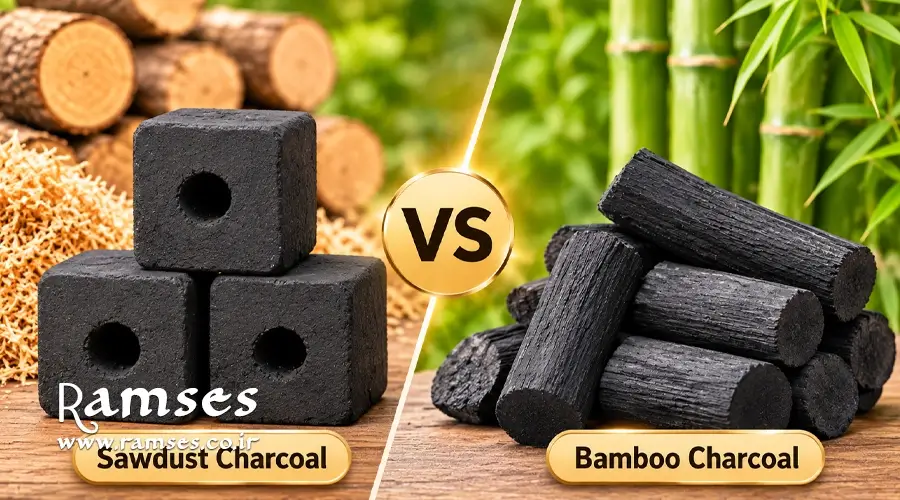
Buyers may wonder about the difference between compressed charcoal made from sawdust and charcoal made from bamboo. The main difference begins with the raw material: sawdust charcoal uses wood-processing residues, while bamboo charcoal is produced from bamboo stalk sawdust or bamboo residues.
However, the quality of the finished product cannot be determined by the raw material name alone. Drying, carbonization, pressing, and manufacturing quality all affect the characteristics of the resulting charcoal.
If you would like a more detailed comparison of the two types in terms of raw materials, heat, burning duration, strength, and ash, read our article: The Difference Between Sawdust Charcoal and Bamboo Charcoal: Advantages, Disadvantages, and Which Is Better?
Request Compressed Sawdust Charcoal from Ramses
If you are an importer, wholesaler, distributor, or business owner operating in the hookah, BBQ, or heating sector, choosing the right supplier starts with understanding the product specifications and selecting the shape that best suits your market requirements.
Ramses offers three shapes of compressed sawdust charcoal:
To request a quotation, provide the product type, required quantity, dimensions, packaging requirements, and shipping destination through the Ramses compressed charcoal price inquiry page.
You can also explore the three product pages to review the details and specifications of each shape before selecting the product that best meets your commercial needs.